
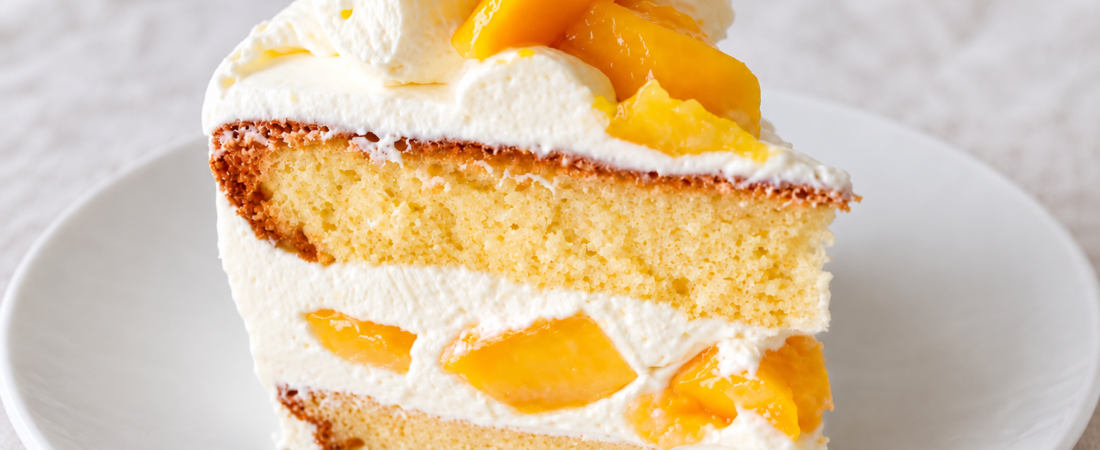
My two kids love mangoes, so I often pack pieces into their lunchboxes. I do have to be careful, though: ripe mango is soft and doesn’t always hold its shape well once it’s cut. A little too much pressure in the lunchbox can leave those lovely pieces squashed!
That same love of mango carries into my baking at Bakedbykoi. In this cake, I pair fresh mango with soft sponge and whipped cream, giving the fruit a place where its tender texture feels right at home.
I didn’t fuss too much over the decoration this time. The kids were hurrying me along, and all they wanted was heaps of mango! So I kept the finish simple and piled on the fruit. Here is how I put it all together.
Ingredients
Sponge: 50ml corn oil, 80g cake flour, 80ml milk, 6 eggs, 1.5g salt, 125g caster sugar and 2.5g cream of tartar.
Filling and topping: 500g prepared mango flesh, 600ml thickened cream and 30g caster sugar. The mango weight excludes the skin and stone.
Bake: approximately 60 minutes at 150°C, using a water bath. Allow additional time for cooling and chilling.
1. Prepare the tin and eggs
I preheat the oven to 150°C and line the cake tin with baking paper. I choose a larger, deep baking tray that comfortably holds the tin. If the tin has a removable base, I wrap its outside securely with foil to help prevent water entering.
I separate the eggs into yolks and whites. The bowl for the whites must be clean, dry and free of yolk or grease so they can whip properly.
2. Mix the sponge batter gently
I whisk the corn oil, milk and egg yolks together, then sift in the cake flour and salt. I mix until smooth, stopping once there are no dry pockets.
In the separate bowl, I beat the whites with the cream of tartar until foamy. I gradually add the 125g sugar while whisking, continuing until the meringue is glossy and holds peaks with gently bending tips. I fold a little into the yolk mixture to loosen it, then gently fold in the rest without knocking out the air.
3. Bake in a water bath
I pour the batter into the prepared tin and place it inside the larger tray. I carefully add hot water to the tray, keeping it below the tin's rim and away from the batter. This water bath creates a gentler baking environment and helps the sponge retain moisture.
I bake for approximately 60 minutes. To check the centre, I insert a clean skewer: it should come out without wet batter. If batter clings to it, I bake a little longer and check again. I handle the hot water tray carefully and cool the sponge completely before filling.
4. Prepare the fresh mango
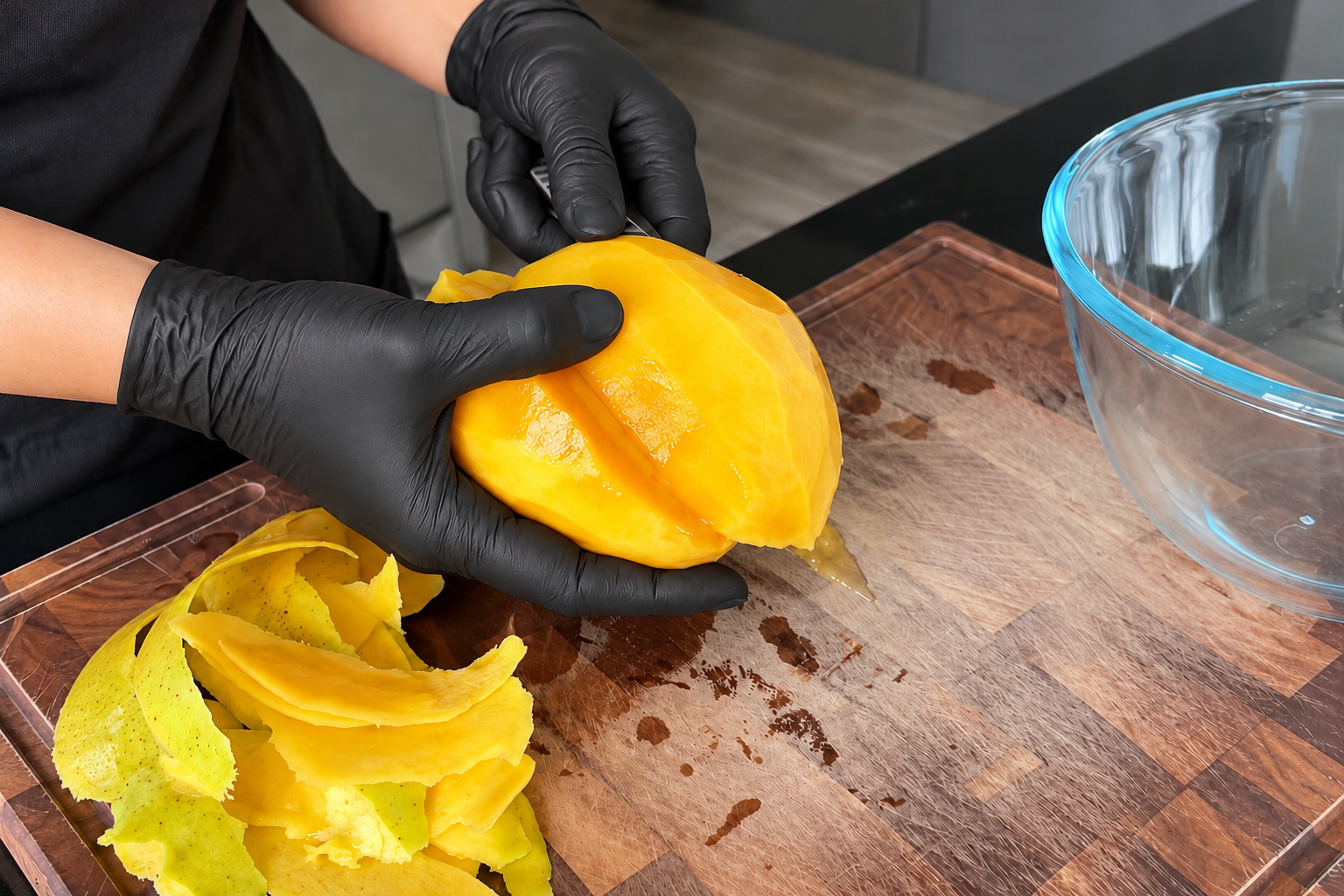
I peel the mango and remove the flesh from around the stone. I weigh out 500g of usable fruit, choosing ripe mango that still holds its shape.
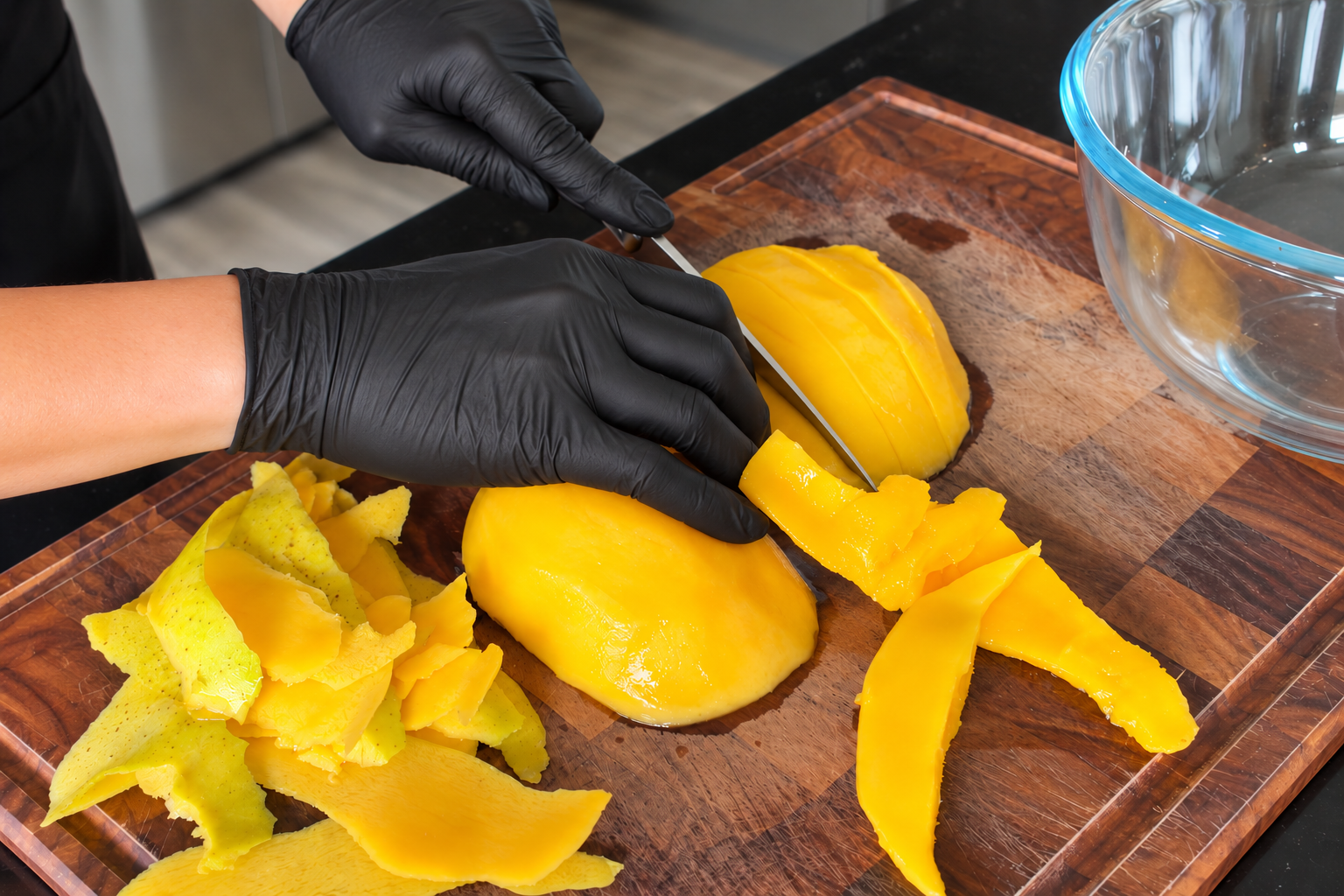
I cut smaller pieces for the filling and keep attractive chunks for the top. If the fruit is very juicy, I let excess juice drain away so the filling stays manageable.
5. Whip the cream
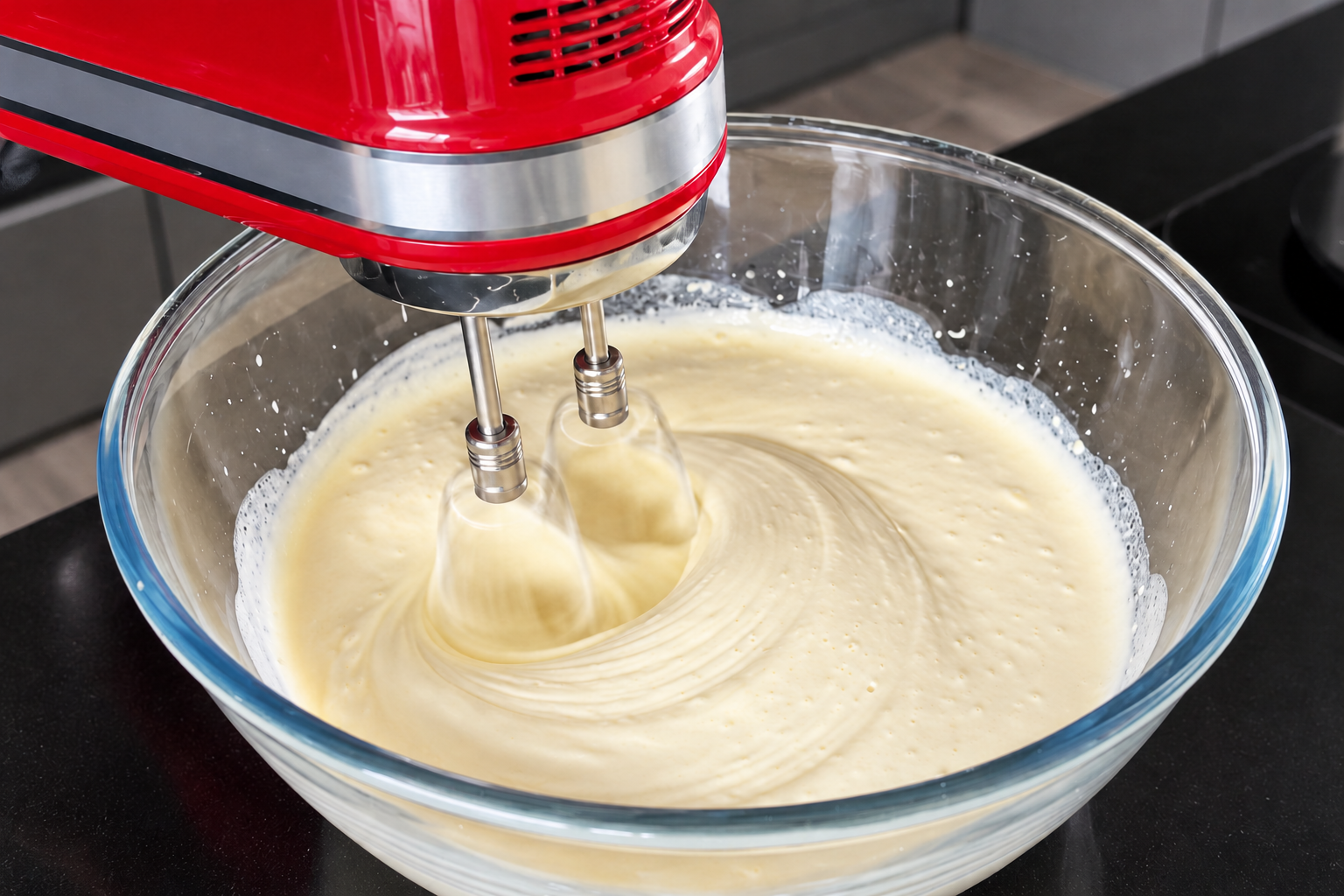
I combine the cold thickened cream with the 30g sugar in a chilled bowl. I whisk until the cream holds its shape but still looks smooth. Near the end, I check frequently; overwhipping can turn it grainy and make spreading difficult.
6. Start the first layer
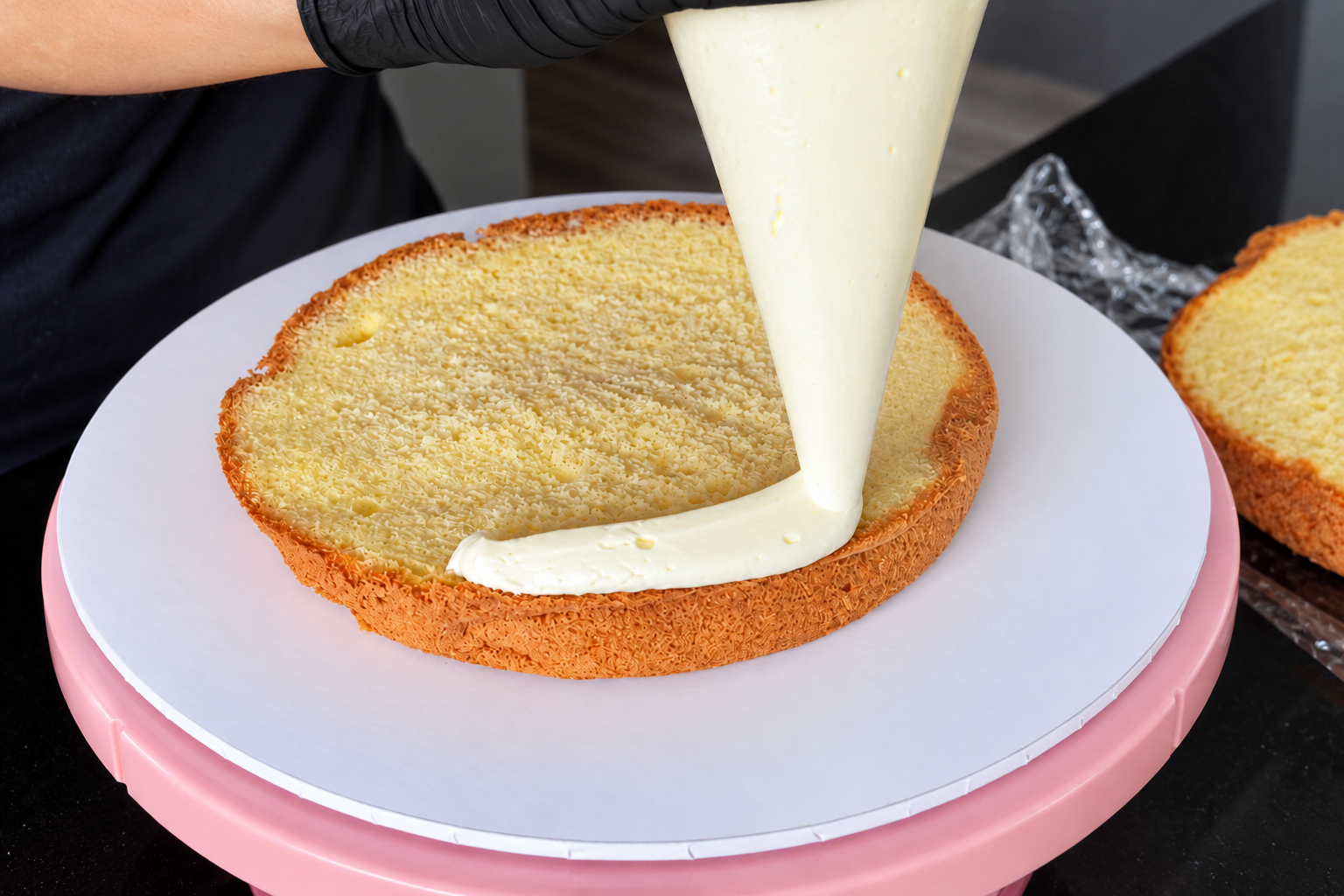
Once completely cold, I cut the sponge horizontally into two even layers with a serrated knife. I place the bottom layer on a cake board or serving plate, then pipe or spread an even layer of cream over it. I keep enough cream aside for covering and decorating.
7. Add the mango filling
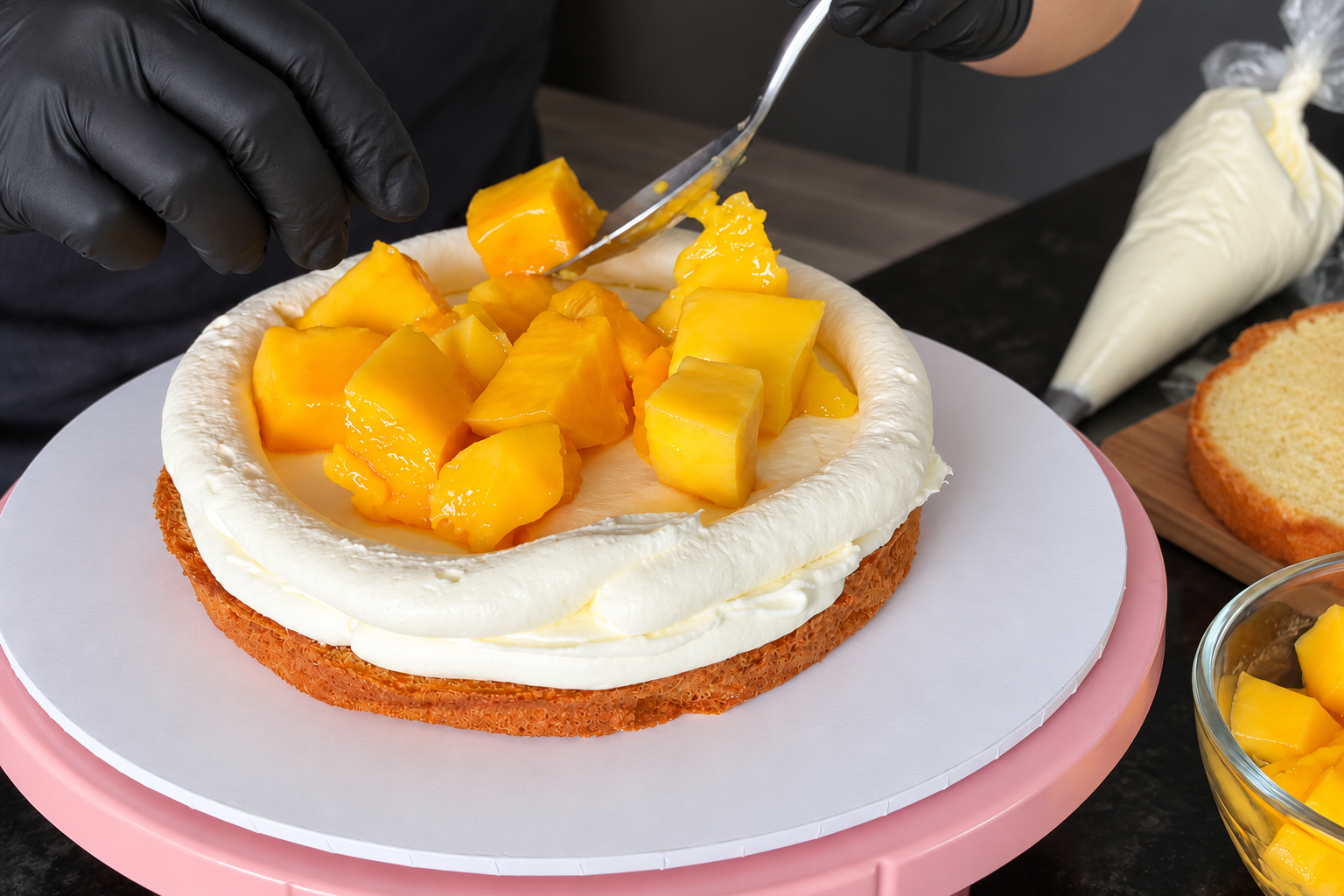
I distribute mango pieces across the cream, leaving a small gap around the edge. An even layer helps each slice contain fruit and keeps the cake balanced.
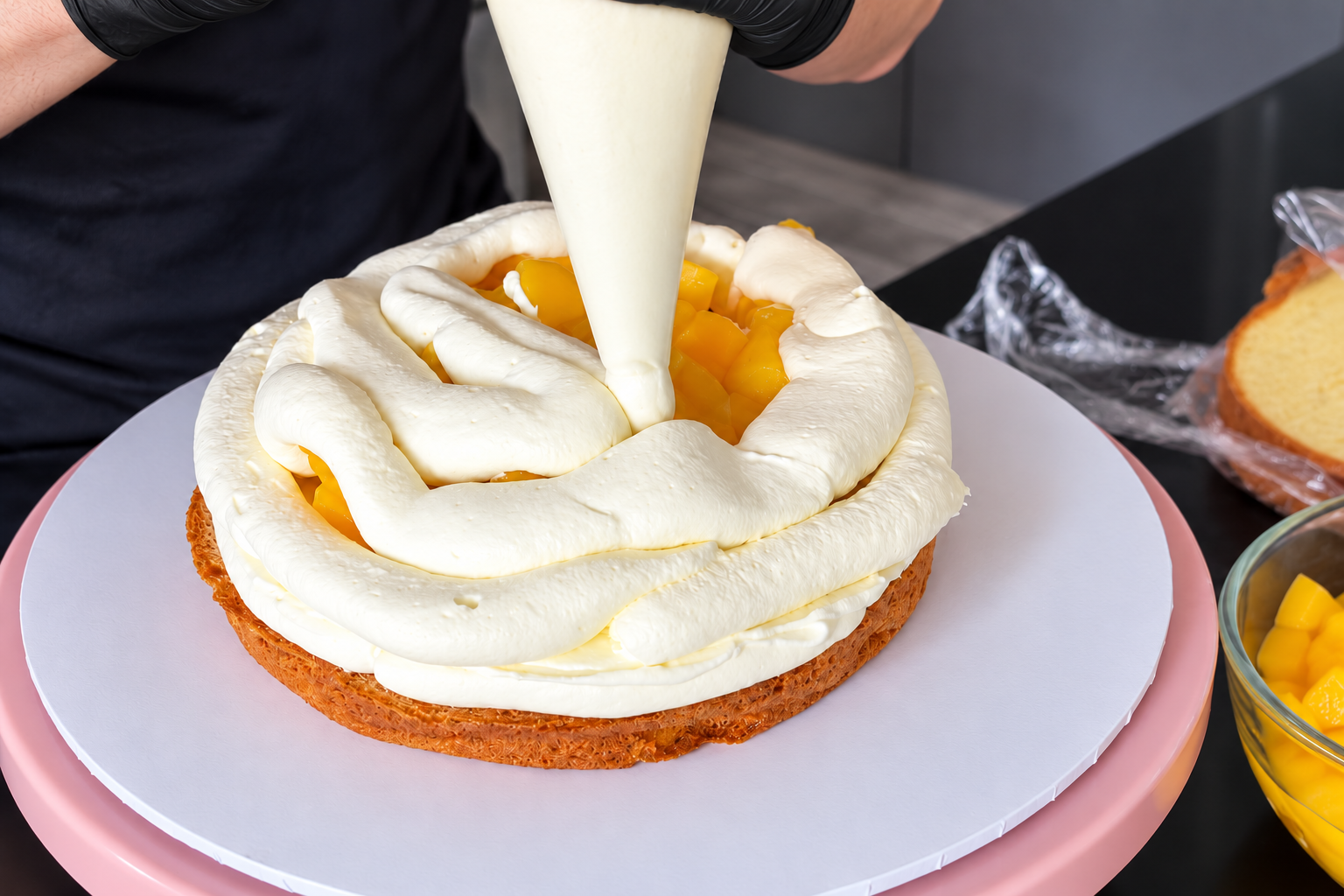
I add cream over and between the mango pieces, filling gaps rather than piling everything in the centre. I lower the second sponge layer into place and press very lightly to level it.
8. Cover and smooth
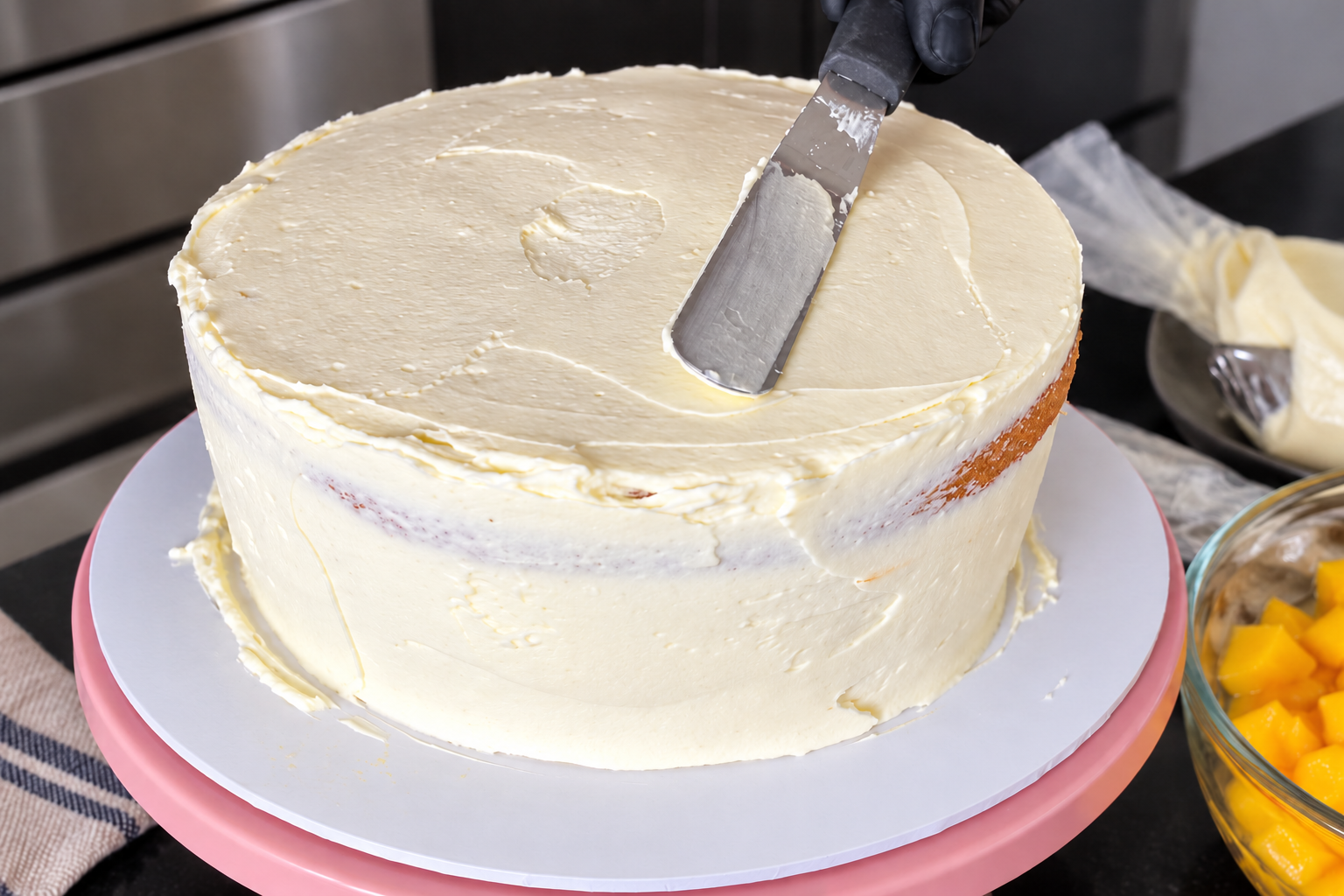
I spread a thin coat of cream over the top and sides. With a palette knife, I smooth the surface while turning the cake. The video shows a light covering with some sponge visible; this relaxed finish works beautifully at home.
9. Decorate with cream and mango
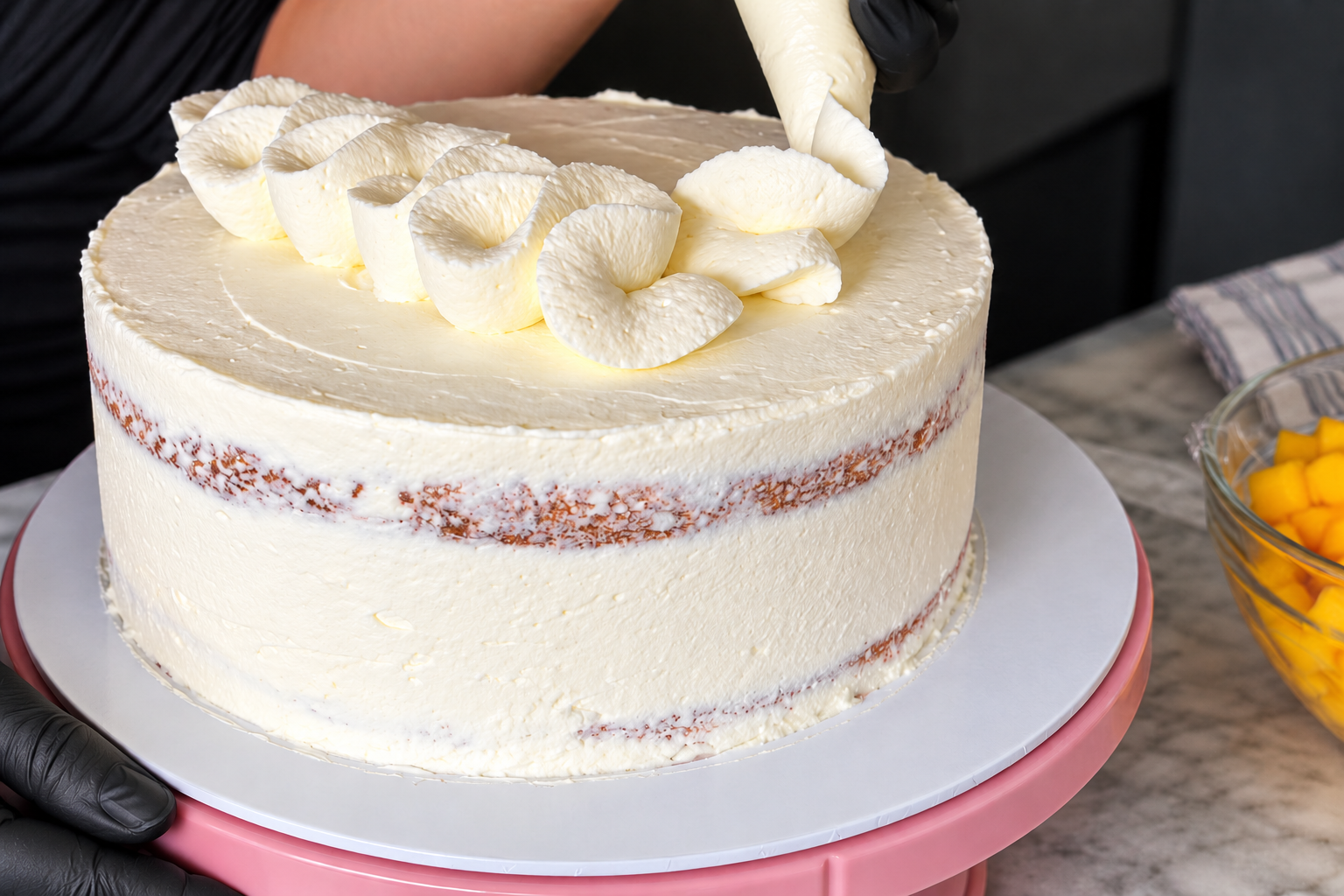
I pipe small cream decorations around the top, applying steady pressure and lifting between each one.
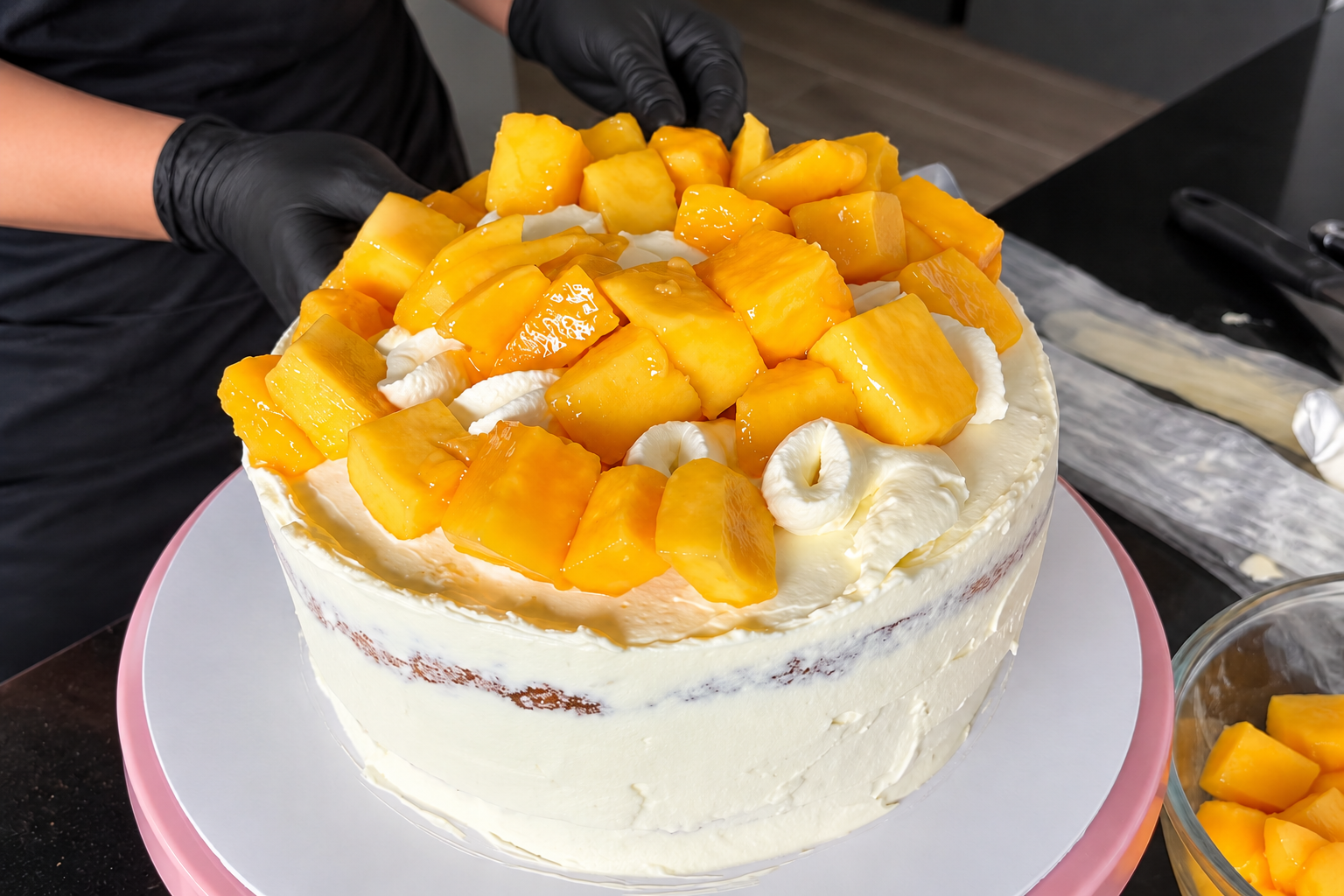
I arrange the reserved mango over the top, spreading the pieces evenly rather than weighing down one side. I leave some cream visible for contrast.
10. Chill, slice and enjoy
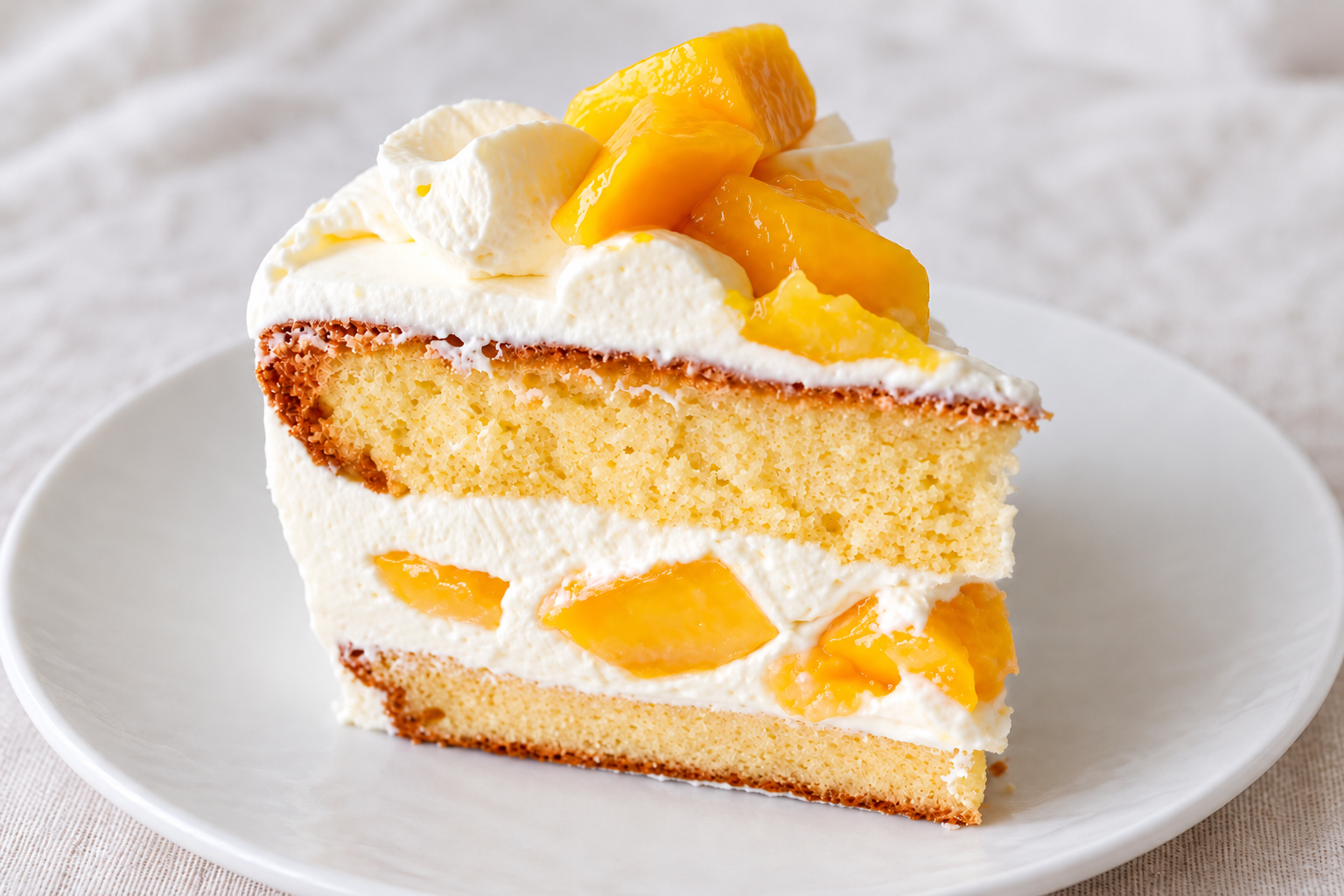
I refrigerate the finished cake until the cream and layers feel settled, allowing around two hours as a starting point. To serve, I use a sharp knife and wipe it between cuts. I keep the cake refrigerated until serving so the fresh cream stays cold.